
Geological Origins of the Beaujolais Pierres Dorées
500 Million Years of Terroir

From the Abysses of the sea to the Hills of Ocre: The Birth of the Pierres Dorées
Five hundred million years ago, when the world was still a shifting puzzle of continents, the first layers of the future Beaujolais were deposited in marine abysses. Over the course of eras, titanic tectonic forces crumpled the Earth’s crust: the rocks folded, fractured, and rose to the light, sculpting these gentle hills that are now known as the Pierres Dorées.
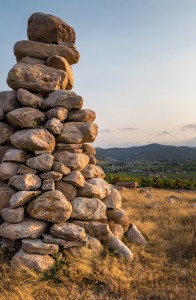
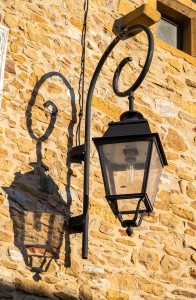
A mosaic of schist, marl, and limestone forms the mineral base for the vineyard.
In this vibrant terrain, pedology reveals a rich history: each valley harbors a microcosm, and each slope exhibits its own mineral nuances. This variety has given rise to the unique viticultural landscapes of the Pierres Dorées, where Gamay vines cling to the slopes like musical scores.
From the Gallo-Roman era to the present-day winemakers: Man and the terroir
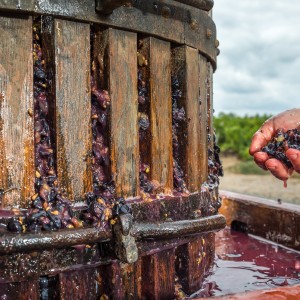
When the first Gallo-Roman winemakers planted their vines on the sunny slopes north of Lyon in the 3rd century CE, they recognized, wthout naming it, the genius of this terroir, shaped by millions of years. Since then, each harvest has reactivated this alchemy born in the depths of the earth: the light bathes the ochre of the stones, the rock imprints its signature, and the hand of man orchestrates it all to offer wines in which the memory of the Ages gently pulses
The great geological eras that shaped the Beaujolais Pierres Dorées
-420 -350 M YEARS AGO – The Brévenne Rift and the first « Blue Stones »
Nearly 400 million years ago, one must imagine an ocean attempting to form: the Brévenne Rift. Within this underwater facture, early volcanic activity spread, forging a crust of « Blue Stones » that can still be found today, embedded like a memory along the western edge of the vineyard.
-350 -300 M YEARS AGO – Hercynian collision and granitic volcanism
Then, around 350 million years ago, two continents collided and formed a European “Himalaya”: the Hercynian chain. These summits were quickly worn down by time (the Massif Central and the Vosges are their remains), spreading their debris into a new sea.
While erosion was leveling the landscape, a second volcanic eruption shook its foundation (320 MYA). Acidic lava flows reached the Bottom of the waters, which were soon pierced by vast granite bulbs (310 MYA). In contact with the magma, the rocks changed and took on shades of purple and dark green, the mineral palette our vines benefit from today.
-200 -180 M YEAR AGO – Jurassic sediments, red sandstone and golden limestone
When the Hercynian mountain range finally eroded away, the sea returned (200 to 180 MYA). Along its shoes, reddish sandstone and variegated clay were deposited, and then, from the Jurassic period onward, thick marl-limestone sediments formed: the future Pierres Dorées, glowing brightly under the sun.
-50 -40 M YEARS AGO – The Alpine uplift and the shaping of today’s valleys
Much later, between 50 and 40 million years ago, the rise of the Alps lifted the Beaujolais between the Forez and Saône basins. Since then, erosion has sculpted the valleys we know today: a checkerboard of schists, clay-limestones and pink granites, nestled behind the Monts du Lyonnais caressed in turn, by Continental, Mediterranean and Oceanic influences.
The variety is so great that in the 19th century, people refered to “bastard Beaujolais”—a geologist’s joke when faced with so many possible combinations!
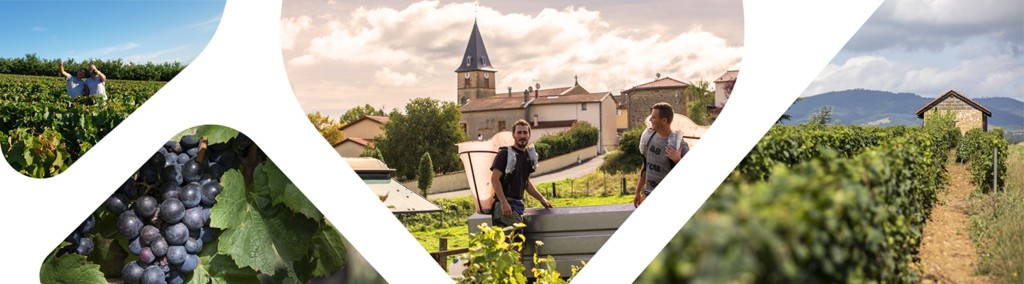
Today, this “bastard” has become a treasure. Through respectful viticulture, winemakers reveal in every glass the memory of these ancient upheavals: a vibration of blue stone, a touch of warm granite, a flash of limestone that transforms the fruit— the history of the Earth, simply passed onto your palate.
